Pages

Showing posts with label weekend getaway from mumbai. Show all posts

Wednesday, March 13, 2019

Valentine's Weekend at Native Place, Kamshet


This Valentine’s day weekend Native Place hosted “Color’s of Love” an event where people came together to celebrate Love of nature.  The event attracted a beautiful set of people looking to escape the city, immerse in  nature and have a change of scene. The highlight of the weekend was the Natural Dyeing workshop conducted by Anushree Chitnis.

Besides, there was rooftop music performance, a bonfire, nature walks and simply chilling out in the flower filled Native Place garden, harvesting veggies and making flower mandalas. People were blown away by the beautiful Jade vine, a gorgeous sunset and then there was a music performance on the roof where B Mohanty charmed us with her beautiful voice. 
Anushree Chitnis a Landscape Architect and Permaculture Designer with a penchant for plants and all things natural took the eager participants through the history of plant-based dye making transporting them to the times when colors were all natural made of ingredients from one’s kitchen or garden.
Participants collected palash flowers, sorted onion peels, tore up purple cabbage and pounded turmeric. The ingredients were brewed in the outdoors on a wood fired stove that added to the feeling of stepping back in time. 

“Another great weekend  at Native Place - learning new things, making new friends, rooftop party, bonfire, nature walks and great food.  From insane blue/green Jade Vine flowers, to the beautiful indigo and ochre shades we made, from the beautiful sunset to the vivid greens - this weekend was truly colourful :)” Roly Saraswat,  participant

About Anushree Chitnis
A landscape architect by profession, Anushree is a gardener at heart. Her observations and experiments have led her to design spaces that encourage not just people but also, birds, bees and insects to spend time in these eco-niches!
Her love for nature also extends itself towards her art work including murals, sketches, up-cycled objects and recently, paintings with natural dyes and inks. She believes the world of natural dyes is a complete sensory and unwinding experience, always full of surprises when embraced with an open mind.
Anushree currently runs an independent design practice, Studio Folium, offering landscape and permaculture design, interior design and art commissions representing bio-diversity. 
Follow her Instagram Page: @anushree_la 
Facebook:https://www.facebook.com/anushree.chitnis 
Linked In : https://in.linkedin.com/in/anushree-chitnis-b2212234


Monday, January 16, 2017

The Palash Tree Cafe at Native Place is now open

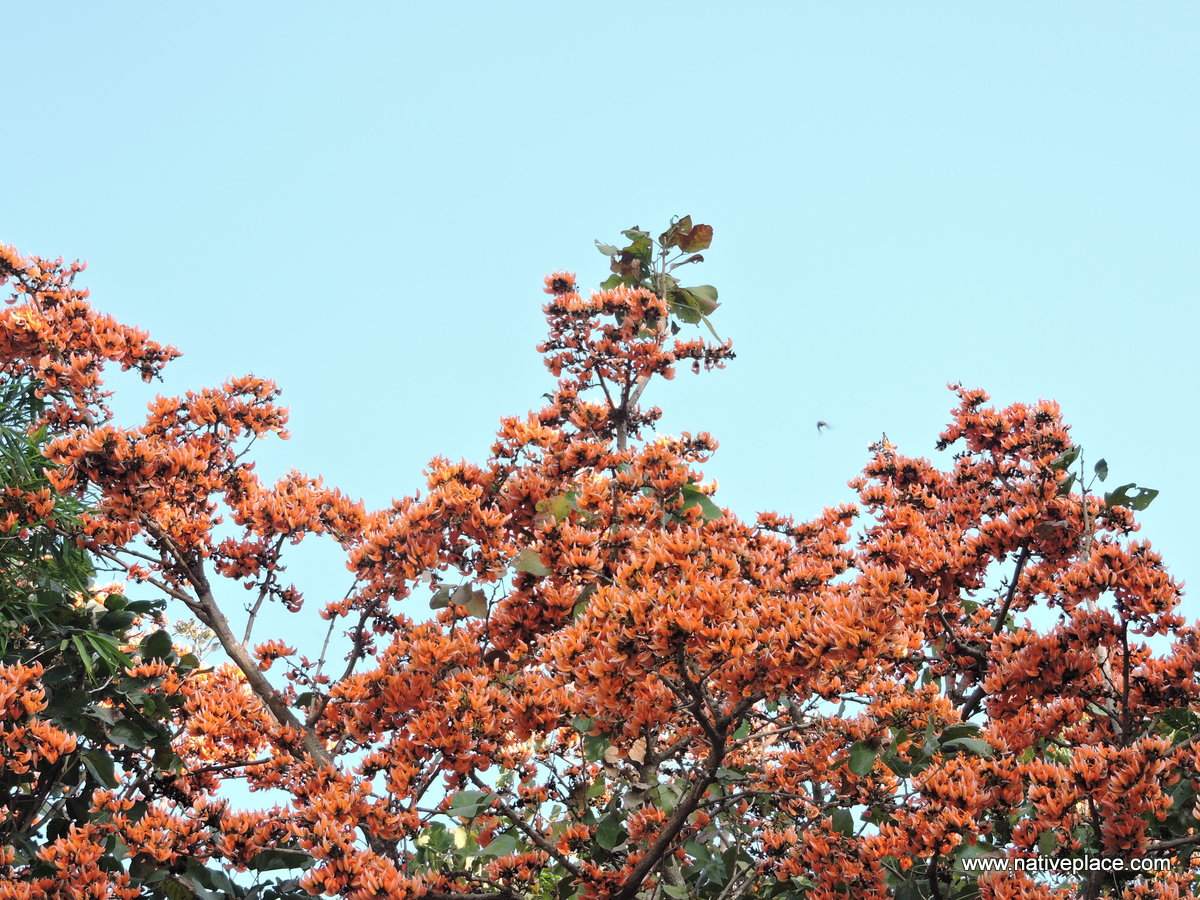
This year our  Palash tree has flowered in January – a curious thing because it usually flowers in March. Another significant thing for us is that it has flowered vigorously – the whole canopy is aflame with its blossoms making a striking picture. Is our late bloomer making up for its tardiness or is this also a result of global warming - one just isn't sure. 
Each day the flowers drop onto the steps that lead to the main door adorning them as though someone has painstakingly strewn flowers to welcome the Native Place  Guesthouse visitors  and Nirvana Paragliding students. . 
I went up to the terrace to get a better view and spotted a number of birds and squirrels attracted by the nectar full flowers. As i sat there i also smelt the Madhu Malati flowers and realized that the fragrance is quite strong in the early mornings.
Pasaba has started to use them in her floral urali decorations 
Coming back to the Palash tree – we are collecting the flowers to make a holi color – again this year. Did you know that the flowers were used to dye monks’ robes?  The flowers can also be  used to make a drink a herbal tea that helps one beat the heat.
For the next few weeks the terrace is going to be my morning go to place .  It is delightful to watch the soft early morning sun’s rays turn the canopy into a fiery orange thereby signalling the birds that the cafe is open. Cause soon after this the birds and squirrels arrive to feast on the sustaining morning beverage (nectar) their antics lead to the dropping of the flowers onto the steps. 
All this while i breathe in the crisp morning air scented by the beautiful flowers of the Madhu Malati vine 
Sheer bliss :) 
Astrid Rao 

Wednesday, June 15, 2016

Cormorants Galore!

Last week at Native Place i happened to go up to the terrace after breakfast and was rewarded by the sighting of a huge flock of cormorants hunting for fish. A whole swarm of them were encircling an area presumably there were lots of fish there. From the distance they made a magnificent sight – the surface of the water was disturbed with their flapping wings as they swirled around creating a huge circular cauldron, diving in, running on water and flapping about. A few straggler egrets added to the drama creating a black and white canvas against the blue waters.  


I checked out this new phenomenon that seemed to be unfolding right in front of us for the next few days just to be sure and yes – it was happening every day. Wow!!!  Such a wondrous sight!

For the first time one can see what seems to be the entire colony fishing together and it makes quite an impact on the senses.

Cormorants have been a common sight by the lake shore at Native Place. Through the year one could spot the odd group in the mornings by the lake shore, diving for fish and perching on tree tops and bushes by the shores wings spread out to dry in the sun.  During summer evenings one had these exhilarating sightings where one looked up by chance to suddenly spot wave upon wave of V shaped flocks akin to migrating geese as they flew back to their roosting spots for the night (or so i believed)
In the recent years an entire colony has  taken to roost in a grove of acacia trees on a narrow spit of land that juts out into the lake  just a few years ago becoming our neighbors. J

Since then we have had the pleasure of watching them at sunset time as they circle around the area and then head for a tree. Lots of squawking and shoving goes on at sunset until they go quiet for the night.

It’s lovely to have a pristine water body before you and spot lake shore birds but to see an entire colony intently at work circling low over the lake is surely special!

The pictures above simply don't convey the largeness of the phenomenon - you have to see it to feel it ! Come connect with nature at Native Place.

More about Cormorants: - Cormorants are large black, fish eating birds with a long,  hook tipped bill.They  are daytime feeders that hunt alone or in flocks.  Cormorants feed by diving and swimming underwater. They can dive to depths of 5 to 60 feet below the surface and stay under water up to 70 seconds. They eat mostly fish and sometimes small invertebrates. Cormorants use their webbed feet to propel them underwater. Cormorants run along the surface of the water to gain enough speed for flight.  Watching these diving birds by the lakeside is a wonderful way to spend time.

Connections: - Recently i came across an interesting piece of info relating the presence of cormorants to tarpon fishing -
When you eat like a cormorant — which is a lot — you poop like a cormorant — which, again, is a lot. This potent concoction falls from the cormorant's precarious perch, entering the food chain only a few feet below. Bacteria then grow in this enriched, (let's call it fertilized) water. Soon the plankton count their lucky stars while feeding on this heaven-sent bounty. Small invertebrates and protozoa’s gorge on the plankton, and on and on it goes up the line. Shrimp, crabs and sardines bless father cormorant before gorging on the millions of minute krill or the collected organic detritus they leave behind.

At the top of this food chain are the tarpon. They come for the bounty the cormorant droppings provide and, with the tarpon, come the anglers. It is simple math: more cormorants mean more food for the tarpon's prey. More guano creates more food and more food means more tarpon.  
Perhaps we shouldn't be so judgmental about cormorants and their greedy eating and pooping habits. Perhaps we should be glad these ancient avians do their digesting where they do. Perhaps we should be glad they haven't better mastered the air. Perhaps we should be pleased they only use flight to get to the fishing grounds and then trundle home again, straight for the mangroves.
Some guides in Mexico say that they kill cormorants because they eat baby tarpon. Gentlemen … haven't you learned by now that it is best not to mess with Mother Nature? Let her be. She has things pretty well worked out, and her devices usually work to the benefit of the angler. Mess with her, and you just may be killing the goose that laid the golden egg. Although in this case it may not be a goose, but a cormorant, and it may not be an egg, but a pile of … OK, OK.  You get the picture. So let's all bless the cormorants.
 Astrid Rao 

Friday, June 5, 2015

The Firefly Phenomena in the Native Place Garden

It happens in the transition of seasons, when summer is on its last legs and the SW monsoon winds begin to penetrate inland signaling the beginning of the monsoons season.  Every night starting at the end of May the Native place garden comes alive, lit up by magical fairy lights. It begins with a single spotting, a few days later a few more and soon the numbers increase until they reach an amazing intensity by the time the monsoon arrives.

Even in the light of the waxing moon these fairy like creatures are mesmerizing to look at.  Fireflies can be seen all over the garden lighting up shrubs, hedges and tree canopies but they do seem to have preferences for certain flora.

Look out from the Native Place  terrace into the canopy of the little Ain tree to see smatterings of ephemeral lights gliding about, floating up and sinking down like graceful glowing embers from a bonfire.  The whole tree seems alive with the many random, slow, fluid movements and lighting rhythms. Watching these guys for a while brings on a sense of awe and quiets the mind. 

Another Ain tree a little further away has another vibe going on altogether. Here we see lots more fireflies going off in a pulsating synchronized  fashion  sweeping up from the bottom or the top or even initiating spontaneously from the middle of the tree canopy. Sitting on the steps looking up at this insignificant by day tree one can’t help but feel lucky to be here right now witnessing the energy that dwells in it.


 My fancies are fireflies, specks of living light twinkling in the dark.

Tagore

When was the last time you saw fireflies?

For many of us who have been born and raised in the city, fireflies may have well been the subject of fairytales and myths. But you too can have this special experience by simply booking a night’s stay at the Native Place guesthouse at Kamshet (3 hours from Mumbai and one hour from Pune

Come experience the magic of the fireflies in the Native Place garden. These seemingly magical insects will be on show in full intensity for the next couple of weeks. 

This phenomena begins at the end of May and continues to increase in intensity until the monsoon begins in full swing – a short period of a few illuminating, magical weeks . Come make the most of this opportunity.

Mail us at info@nativeplace.com

Visit our website www.nativeplace.com

Follow us on facebook https://www.facebook.com/pages/Native-Place/147992775230428


Astrid Rao 


Monday, December 8, 2014

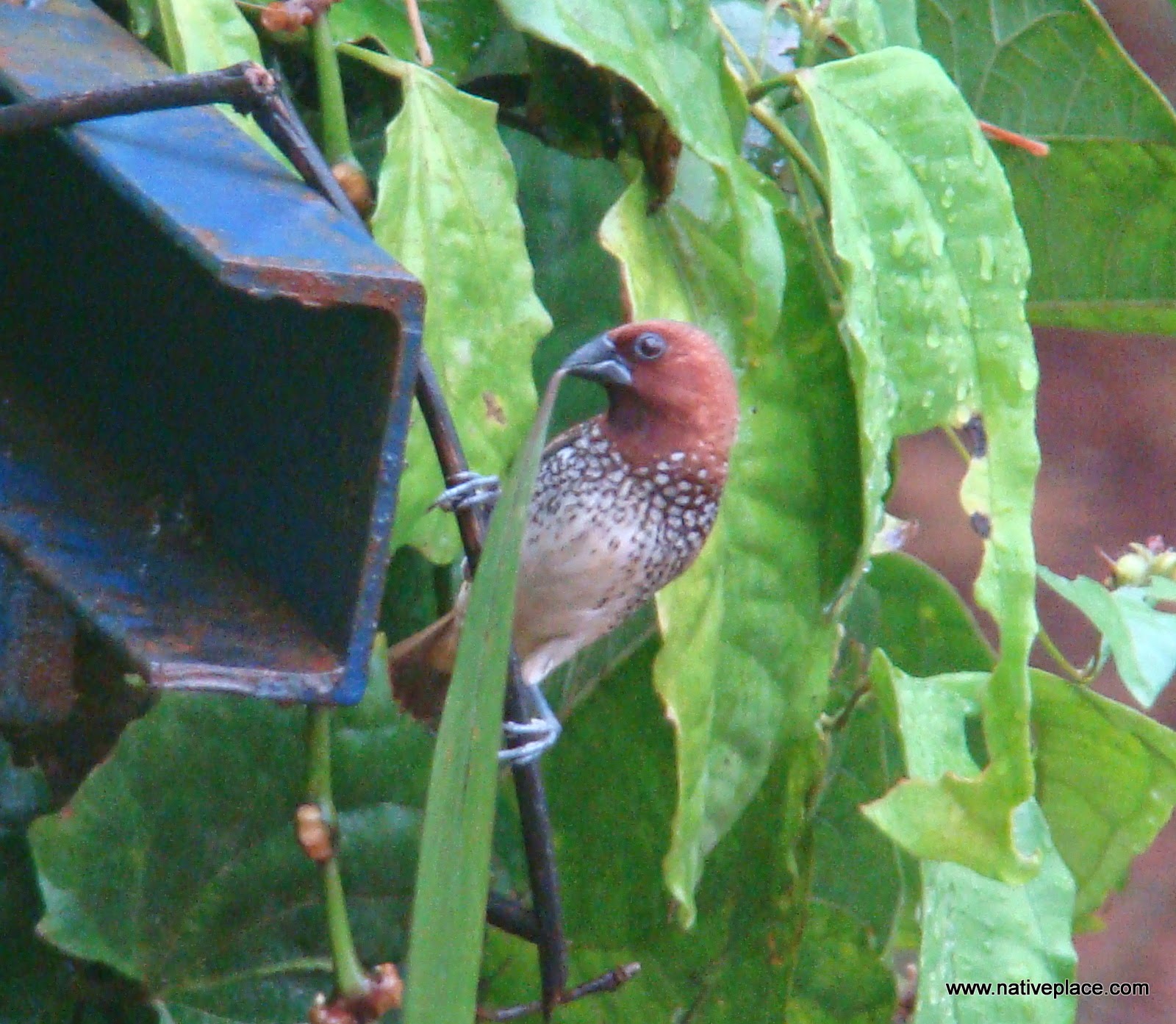
Scaly Breasted Munia at Native Place, Kamshet


Winter approaches and at Kamshet the paddy in the fields is ready for harvest. Driving through one can see people hard at work harvesting the grain. 

Last weekend I spotted a Scaly Breasted Munia in the garden from the veranda outside my room at Native Place  – Have only seen these birds once a few monsoons ago and was thrilled to spot  them so close to the house.  They were busy building a nest in the pergola outside the lake front rooms – this was easy to deduce as the birds were flying in and out with long grasses in their beaks and disappearing into the climber cover 

Here is some info on this little bird - The Scaly-breasted Munias breed year round and may have multiple broods on a good year, up to 3-4 broods. The male brings nesting materials while the female builds, often from the inside. In some, the breeding nest is later used as a roosting nest.

The nest is an untidy globe made out of grass and bamboo leaves, with a side entrance.  The nests are not woven and material is simply pushed together. But the nests are well-made, robust and waterproof. The birds work tirelessly and the nest can become an enormous globe. Both parents incubate. The eggs hatch in about 2 weeks and the young are fed entirely vegetable matter, which is regurgitated by the parents. They fledge in 18-19 days. Juveniles often form their own flocks after leaving their parents, and wander about together.  

Astrid Rao 

Monday, August 4, 2014

Whew! The Vadivali Lake is full

Vadivali Lake  -  A view from the Native Place Guesthouse

The monsoon did not start so well this season. There was an air of concern at the Native Place guesthouse. All our staff and most people plant rice and the delayed rain was definitely a problem.

With the signal of the first rains most people had planted out their paddy seeds (they usually save up seed from the last harvest to use the next season) now with the rain playing truant the sun scorched the young paddy seedlings. People had to bear the expense of buying seed and replanting.

Water level on the  21st July

The next question was would there be enough rain to fill up the lake. Our gaze turned to the lake in front of us and the brown banks all around it.  Each time we visited the guesthouse I took pictures from my balcony to monitor the levels of the lake.

Imperceptible change in level on the 27th  July 2014

Last week we drove up to Native Place on Wednesday evening. It was dark when we got there but the next morning (Thursday) I woke up excitedly and stepped out into the balcony camera in hand hoping for a steep increase in levels and there it was – yeaaaaaaaaaaaaah the lake is full. The paddy is thriving in the fields and all is well in our world.

3rd August 2014 - Full to the brim 

The rains played truant in the month of June but thankfully made up in the July.   

Astrid Rao 


Tuesday, July 29, 2014

Pink & Purple


It is the monsoon season and the predominant color is green but pink purple and silver seemed to be the theme of the weekend – there were Michelle’s purple boots that were driving me insane – all I could think of was I want I want I want

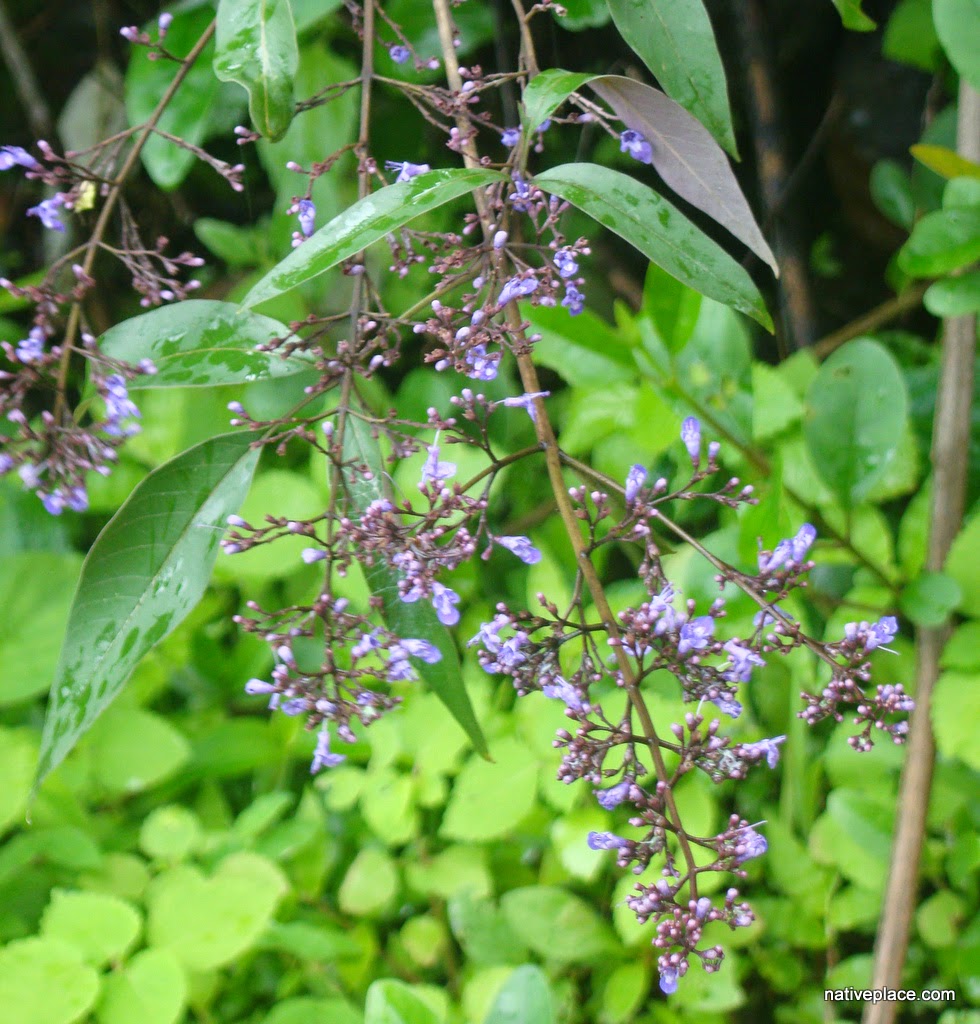
Then we noticed 2 varieties of Vitex Negudo in flower

and the pink frangipani that we had planted 2 years ago

The check dams we had built them in summer seem to be working like magic – tiny little silvery water falls

We came across a tree fall – check Dwane drinking this moss charged water

A medicinal plant in flower – one of the Dashamularisht that is supposed to be in short supply and may be endangered also pink (sorry I don’t know the name)


Green – the color of the paddy we have planted – next weekend is transplanting time so guys if you want to get your feet squishy in muck and plant the rice that we will serve you soon … come on over 


Come on over :)

Peace Bliss & Happy Landings 

Astrid & Sanjay Rao 

Wednesday, July 16, 2014

Kingfisher Tales


Two weeks ago we drove up to Native Place early in the morning. We got there in good time and as usual I ran into the garden to see how it was getting along.   There had been a few drizzles and everything was green ad growing vigorously in the humid weather. The gardeners Anil and Eknath were quietly working on the slope above the veggie patch and I made my way towards them.  As I walked towards them I was greeted by an incessant scolding sound that seemed to be coming from high up in the trees. I spotted the familiar flash of blue immediately. ‘Now what’s her problem’? I thought. 


Then last week Anil showed me these tunnels bored into an unsightly bank of land that had been the result of overenthusiastic leveling of the slope to plant veggies last year. Big blunder it was and I cringed each time I laid my eyes on it praying for inspiration to help me disguise it.  Anil told me he had seen a kingfisher entering the tunnel and  beckoned me closer to listen to the sounds the chicks were making – I could see the scat at the entrance of the tunnel and as I leant forward. Once more on cue the kingfisher began to scold me for daring to go to close to the tunnel and I retreated not wanting to cause the poor mama any undue worry.

Kingfisher nest - Dont miss the white scat!

And then the penny dropped. Ah yes had read about this somewhere a while ago. Kingfishers make tunnels high on the mud banks of the river. They dig out the soft mud and lay their eggs there. Now this was by no means the lake or river bank but it did serve the kingfisher’s purpose.  Clever birds!!! They had found a suitable nesting place not even a hundred meters from the lake.  We were all delighted – to host the family of kingfishers but as far as mama bird was concerned she was not at all happy to have us lurking around. Hopefully she will get used to having us around – after all we do have vegetable plants to take care of. Until then we will have to tread lightly and put up with her rude calls. 

Thursday, March 6, 2008

In the shade of the old Umbar tree


When we acquired the plot of land on which Native Place now sits, my only regret was that there were no trees growing on it. I later came to know that according to a custom when land is sold the seller could cut off the trees and take away the wood.

Once we began to build native place this stunted low canopy that had missed detection as tree even though it had a huge trunk began to grow – and how it grew. During the first year it grew to the height of the first level and by the next year it was at the height of the 2nd level of the house.

Today it is a large dense canopied tree under whose shade tents and hammocks are strung and whose branches are inviting to visitors young and old. Spend an afternoon in the hammock under this tree and depending on the season you will glimpse tailor birds, sun birds, bulbuls, ioras, leaf birds, orioles, leaf warblers, and many more birds

Over the years we got more and more familiar with this wonderful tree. It is known by different names such as 'Gular', 'Udumbar', or ‘Umbar’. Its Latin name is Ficus Glomerata Roxb. It is also known as Cluster fig. It is found all over India and grows wild in the forests and hills. It has many religious associations, a host of medicinal uses and many myths are also associated with this tree.

According to Buddhist scriptures, the Udumbara blossoms every three thousand years and is believed by Buddhists to be a sign of an overwhelming blessing and good fortune. Udumbara is an imaginary flower that only blossoms every 3000 years when the King of Falun comes to the human world. A collection of Buddhist sutras, claim this heavenly flower is a sign of rare preciousness and a miracle.

In Maharashtra it is venerated as the abode of Lord Dattatreya and therefore not cut. I learnt this from the old caretaker of the plot who told me that is the reason why the tree was saved. So it was by the intervention of the gods after all that we were given this mother of a tree that sustains and nourishes a variety of creatures, us included.

You will be hearing more about this special tree in the future

Astrid Rao