Pages

Showing posts with label Monsoon Getaway near Mumbai. Show all posts

Wednesday, March 13, 2019

Valentine's Weekend at Native Place, Kamshet


This Valentine’s day weekend Native Place hosted “Color’s of Love” an event where people came together to celebrate Love of nature.  The event attracted a beautiful set of people looking to escape the city, immerse in  nature and have a change of scene. The highlight of the weekend was the Natural Dyeing workshop conducted by Anushree Chitnis.

Besides, there was rooftop music performance, a bonfire, nature walks and simply chilling out in the flower filled Native Place garden, harvesting veggies and making flower mandalas. People were blown away by the beautiful Jade vine, a gorgeous sunset and then there was a music performance on the roof where B Mohanty charmed us with her beautiful voice. 
Anushree Chitnis a Landscape Architect and Permaculture Designer with a penchant for plants and all things natural took the eager participants through the history of plant-based dye making transporting them to the times when colors were all natural made of ingredients from one’s kitchen or garden.
Participants collected palash flowers, sorted onion peels, tore up purple cabbage and pounded turmeric. The ingredients were brewed in the outdoors on a wood fired stove that added to the feeling of stepping back in time. 

“Another great weekend  at Native Place - learning new things, making new friends, rooftop party, bonfire, nature walks and great food.  From insane blue/green Jade Vine flowers, to the beautiful indigo and ochre shades we made, from the beautiful sunset to the vivid greens - this weekend was truly colourful :)” Roly Saraswat,  participant

About Anushree Chitnis
A landscape architect by profession, Anushree is a gardener at heart. Her observations and experiments have led her to design spaces that encourage not just people but also, birds, bees and insects to spend time in these eco-niches!
Her love for nature also extends itself towards her art work including murals, sketches, up-cycled objects and recently, paintings with natural dyes and inks. She believes the world of natural dyes is a complete sensory and unwinding experience, always full of surprises when embraced with an open mind.
Anushree currently runs an independent design practice, Studio Folium, offering landscape and permaculture design, interior design and art commissions representing bio-diversity. 
Follow her Instagram Page: @anushree_la 
Facebook:https://www.facebook.com/anushree.chitnis 
Linked In : https://in.linkedin.com/in/anushree-chitnis-b2212234


Monday, April 24, 2017

Native Place Easter Special


This Easter weekend we had a fun Easter Egg Huntat the Native Place Guesthouse followed by a special ‘East Indian’ Easter lunch. We had invited children from Palegaon ( the nearest village) to take part in the hunt. 


The children arrived at 10.30 and sat shyly in a group. We invited them to join us blowing up balloons. This worked as an icebreaker and soon they were all running around helping with the decorations.


To continue the mood of excitement we played a game - anyone heard of ‘Mamachya patra haravla’ ? It’s the local version of ‘a tisket a tasket’ a kindergarten game I’ve played myself as a child. Such a simple delightful game – one could feel the nostalgia as our garden crew and the paragliding crew spontaneously joined in the fun.

Before we knew it chairs were being called for and musical chairs was next on the plan – have to say it was so much fun that the Nirvana Adventures paragliding students and guests also wanted to play
Next came the Spoon and Lime race – Vinod won hands down – he seemed to have a cheat code of some sort but we never figured it out J .  

 Finally it was time for the Easter egg hunt but i have to say that it did not last too long – the kids were so sharp eyed that within 10 minutes all the goodies were in the bag or should i say basket.


It was a fun morning and everyone had a great time – we are inspired to do it again next year
Mark the dates and see that you show up.  


Astrid Rao
info@nativeplace.com


Sunday, August 28, 2016

Millet and Traditional Cooking Workshop at Native Place with the ' Cooking Pilgrim'


She is  passionate about cooking traditional dishes and using fresh organic produce and this sentiment led Latha Sagi to become the  Cooking Pilgrim, wandering about the country visiting organic farms where she can harvest fresh local seasonal produce  and turn them into into balanced nutritious tasty dishes. She shares her knowledge and her passion with generosity and her ability  to feed and to serve led to her being fondly called 'Latha Devi'.

Monday morning 4 excited women arrived at Native Place for a 3 day cookout only to find that the kitchen had been cleared out.  It was a classic Oops moment but after an initial shock we settled down and began to see the plus points of cooking on hte tandoor terrace ( temporarily set up as kitchen) the place was a mess but the big bonus was it was like cooking in the outdoors,  we had lots of space and great views of the garden. We even had some cheeky bulbuls come by to share a few crumbs.

3 days of  popping grains other than corn ( that was a whole bunch of fun) experimenting with various grains and oilseeds and pulses , making dosas , idlis, khichdi, payasams ladoos,  a variety of chutneys,  cool refreshing  and warm beverages. We made use of  many ingredients from the garden including flowers, , local grains and oilseed – so much to learn so much to taste – it was a sensory feast..

Our 3 day cooking bonanza did not stay just that – we found time to explore the garden, walk in the rain, visit Palikade, admire wild flowers and wade in the monsoon  streams.  An idyllic time it was.
Thank you Sneha for organising it all, thank you Latha Sagi for your generosity and warmth , thank you Tejal for your unflagging  exuberance and thanks Anushree for finally coming by 
Was a great weekend girls, lets do it again soon

To see more pictures check check the Native Place Facebook Album

Astrid Rao
www.nativeplace.com

Monday, June 13, 2016

Which Kadamba Tree ?

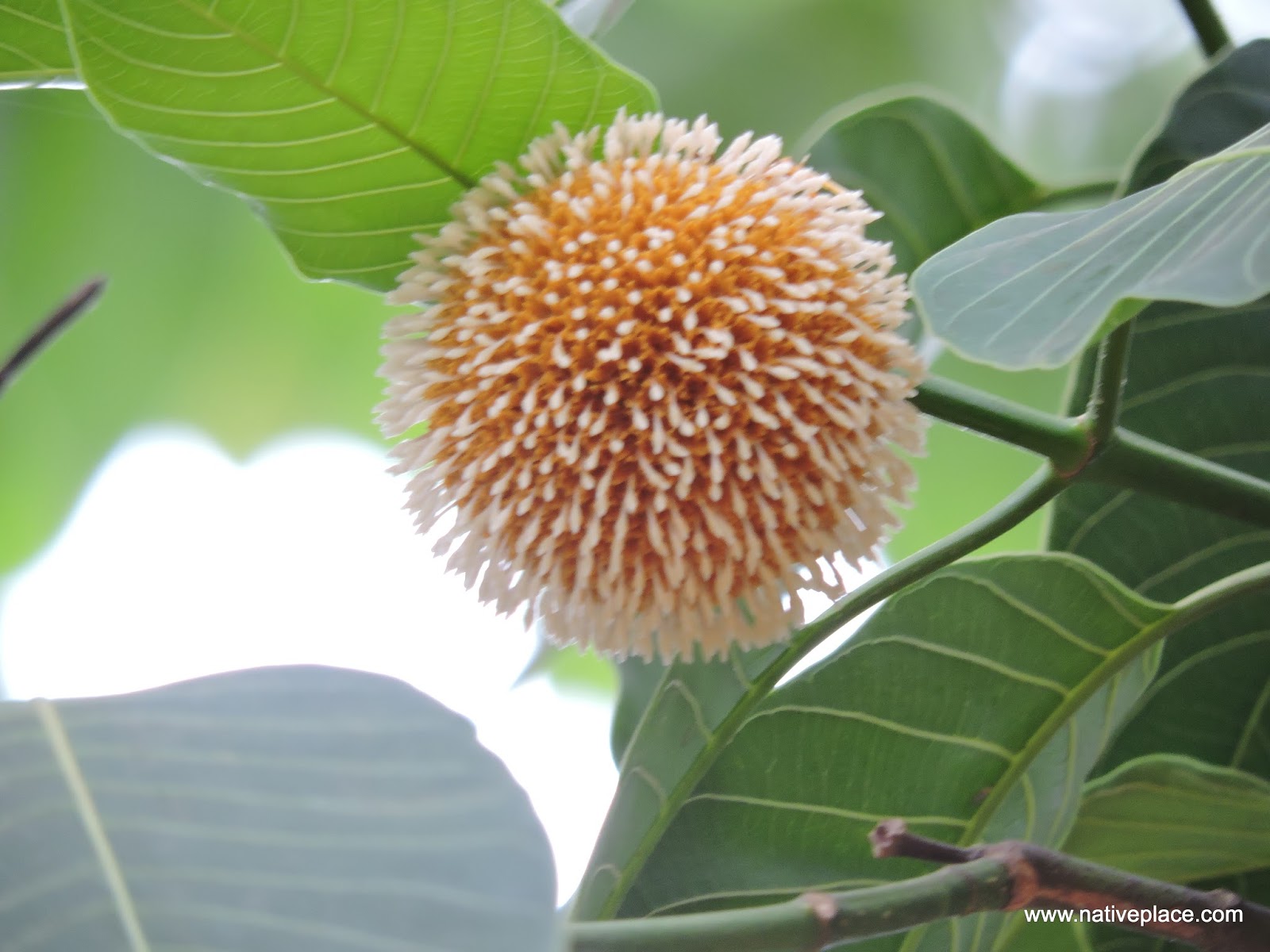
Kadamb (Anthocephalus Cadamba/कदंब) or The Common Bur Flower is a large, handsome, umbrella shaped tree with branches arranged in whorls around the central trunk. It is evergreen, fast growing and has a graceful appearance.  It produces unique globular shaped flowers coloured a striking yellow to orange.  
 In India the tree is mainly associated with Lord Krishna and stories about him and his gopis prancing about in the forests of Brindavan among the Kadamba groves abound.  This tree is also closely associated with the Mother Goddess (often referred as Kadambavana vasini) "She Who Resides in the Forest of Kadamba Trees."

We have a lovely specimen of this legendary tree in the Native Place Garden that we planted about 7 or 8 years ago having been intrigued by the lore of its beauty as well as its mythological and ecological associations.  You can enjoy its beauty and shade throughout the year but in the month of May the tree offers a special sensory experience when it flowers in profusion, showing off its quaint yet beautiful flowers that attract a host of bees and exude a heady perfume. And as the flowers drop one finds the curious golden globes scattered all around the tree waiting to dry off and release thousands of little seeds.

We have built a low wall all around our Kadamba tree. A silent invitation to you to come sit under this tree and enjoy the ambience it conjures.

The Kadamba Anthocephalus Cadamba  is often mixed up with the Kaim – Mitragaayne parviflora  a tree that is dominant in the forests of Brindavan. Both spcies produce globular blossoms but the Kaim’s flowers are not as striking  to look at. They also differ greatly in canopy and leaf shape. Where the Kadamba has a straight bole and branches arranged in upward reaching whorls the Kaim has a fairly meandering trunk.

i came across the Kaim in the “Trees of Delhi” by Pradeep Kishen. Pradeep  sheds light on this confusion/ puzzle on page 149 –  where he informs us that the REAL Krishna Kadamb  of Brindavan is Neelamarcia  cadamba ‘Kaim’ not Anthocephalus Cadamba ‘Kadamba’  which  is unique to moist  forests in the NE of  India and would not survive unaided in the hot dry  Brindavan area.  Kaim on the other hand is not only native to the remnant Brindavan forests but is their dominant tree. But in the Brindavan region the Kaim is called kadamb  J  no wonder the confusion !

Oh well !!! Our Kadamba may not bring to mind the visual of Krishna playing his flute any more but it remains the tree closely associated with the Mother Goddess  - Kadambavana vasini "She Who Resides in the grove of Kadamba Trees."
The tree is said to be vanishing from Indian forests and needs to be planted and celebrated once more for it its beauty, functionality and usefulness.
Some Uses
This beautiful tree is also known for its medicinal virtues. The tree has astringent & antipyretic properties. It is believed to have cure for ulcers, digestive ailments, diarrhoea, expectorant, fever, vomiting etc.

A yellow dye is obtained from the root bark. Kadamb flowers are an important raw material in the production of attar, Indian perfume with Sandalwood (Santalum Album). The tree is grown along avenues, roadsides and villages for shade. The fresh leaves are sometimes used as plates.


In Permaculture
The Kadamba is suitable for reforestation programs. It sheds large amounts of leaf and non-leaf litter which on decomposition improves  the  physical and chemical properties of soil.

Cultural aspects
It is common belief among the natives of many villages in the state Chhattisgarh that plantation of Kadamb tree near to lakes and ponds, brings happiness and prosperity in their life.


Thursday, January 21, 2016

5 Star Bird Watching in the Native Place Garden

  
 Doc was here on his annual visit. He has been spending the month of December with us (Native Place & Nirvana Adventures) for almost a decade now to indulge in Paragliding his main obsession along with swimming, bird watching, gardening and this time cycling too.


This year things were a bit different. Doc said he had gotten over his paragliding obsession and although flying remains high on his list he often took time out now and then to indulge in the art of doing nothing.

One day i came across him sprawled in a hammock in a shady isolated spot in the garden. He had a book and his binoculars handy and when I approached him he mentioned to me that he was indulging in 5 Star bird-watching. It’s simply perfect he said – all afternoon I relax here reading and every now and then a bird comes by and as I sit here watching the birds present themselves and I don’t even have to move to see them from different angles to recognize or admire them.

Doc has been a birder for many years and i often go to him if I am not able to recognize a new visitor. We discussed the variety of birds that visit the garden – thanks to the biodiversity that we have created over the past years. Birds are indicators and their presence tells us that we have done a good job.

Check out the album of just some of them that we have clicked over the years.
Happy Birding and Hammocking in the Native Place Garden


Astrid Rao 


www.flynirvana.com

Friday, June 5, 2015

The Firefly Phenomena in the Native Place Garden

It happens in the transition of seasons, when summer is on its last legs and the SW monsoon winds begin to penetrate inland signaling the beginning of the monsoons season.  Every night starting at the end of May the Native place garden comes alive, lit up by magical fairy lights. It begins with a single spotting, a few days later a few more and soon the numbers increase until they reach an amazing intensity by the time the monsoon arrives.

Even in the light of the waxing moon these fairy like creatures are mesmerizing to look at.  Fireflies can be seen all over the garden lighting up shrubs, hedges and tree canopies but they do seem to have preferences for certain flora.

Look out from the Native Place  terrace into the canopy of the little Ain tree to see smatterings of ephemeral lights gliding about, floating up and sinking down like graceful glowing embers from a bonfire.  The whole tree seems alive with the many random, slow, fluid movements and lighting rhythms. Watching these guys for a while brings on a sense of awe and quiets the mind. 

Another Ain tree a little further away has another vibe going on altogether. Here we see lots more fireflies going off in a pulsating synchronized  fashion  sweeping up from the bottom or the top or even initiating spontaneously from the middle of the tree canopy. Sitting on the steps looking up at this insignificant by day tree one can’t help but feel lucky to be here right now witnessing the energy that dwells in it.


 My fancies are fireflies, specks of living light twinkling in the dark.

Tagore

When was the last time you saw fireflies?

For many of us who have been born and raised in the city, fireflies may have well been the subject of fairytales and myths. But you too can have this special experience by simply booking a night’s stay at the Native Place guesthouse at Kamshet (3 hours from Mumbai and one hour from Pune

Come experience the magic of the fireflies in the Native Place garden. These seemingly magical insects will be on show in full intensity for the next couple of weeks. 

This phenomena begins at the end of May and continues to increase in intensity until the monsoon begins in full swing – a short period of a few illuminating, magical weeks . Come make the most of this opportunity.

Mail us at info@nativeplace.com

Visit our website www.nativeplace.com

Follow us on facebook https://www.facebook.com/pages/Native-Place/147992775230428


Astrid Rao 


Monday, December 8, 2014

Scaly Breasted Munia at Native Place, Kamshet


Winter approaches and at Kamshet the paddy in the fields is ready for harvest. Driving through one can see people hard at work harvesting the grain. 

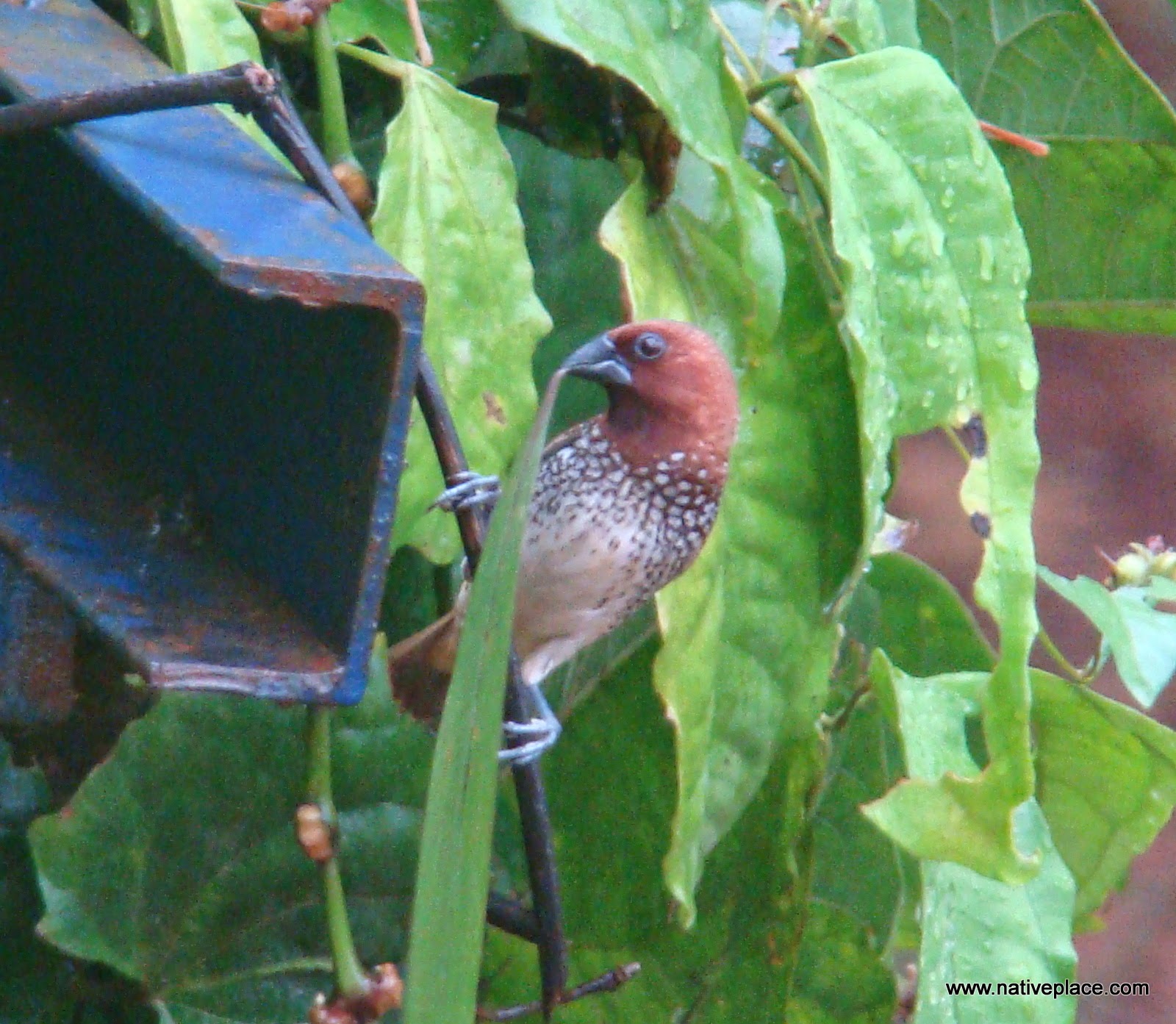
Last weekend I spotted a Scaly Breasted Munia in the garden from the veranda outside my room at Native Place  – Have only seen these birds once a few monsoons ago and was thrilled to spot  them so close to the house.  They were busy building a nest in the pergola outside the lake front rooms – this was easy to deduce as the birds were flying in and out with long grasses in their beaks and disappearing into the climber cover 

Here is some info on this little bird - The Scaly-breasted Munias breed year round and may have multiple broods on a good year, up to 3-4 broods. The male brings nesting materials while the female builds, often from the inside. In some, the breeding nest is later used as a roosting nest.

The nest is an untidy globe made out of grass and bamboo leaves, with a side entrance.  The nests are not woven and material is simply pushed together. But the nests are well-made, robust and waterproof. The birds work tirelessly and the nest can become an enormous globe. Both parents incubate. The eggs hatch in about 2 weeks and the young are fed entirely vegetable matter, which is regurgitated by the parents. They fledge in 18-19 days. Juveniles often form their own flocks after leaving their parents, and wander about together.  

Astrid Rao 

Monday, August 4, 2014

Whew! The Vadivali Lake is full

Vadivali Lake  -  A view from the Native Place Guesthouse

The monsoon did not start so well this season. There was an air of concern at the Native Place guesthouse. All our staff and most people plant rice and the delayed rain was definitely a problem.

With the signal of the first rains most people had planted out their paddy seeds (they usually save up seed from the last harvest to use the next season) now with the rain playing truant the sun scorched the young paddy seedlings. People had to bear the expense of buying seed and replanting.

Water level on the  21st July

The next question was would there be enough rain to fill up the lake. Our gaze turned to the lake in front of us and the brown banks all around it.  Each time we visited the guesthouse I took pictures from my balcony to monitor the levels of the lake.

Imperceptible change in level on the 27th  July 2014

Last week we drove up to Native Place on Wednesday evening. It was dark when we got there but the next morning (Thursday) I woke up excitedly and stepped out into the balcony camera in hand hoping for a steep increase in levels and there it was – yeaaaaaaaaaaaaah the lake is full. The paddy is thriving in the fields and all is well in our world.

3rd August 2014 - Full to the brim 

The rains played truant in the month of June but thankfully made up in the July.   

Astrid Rao 


Tuesday, July 29, 2014

Pink & Purple


It is the monsoon season and the predominant color is green but pink purple and silver seemed to be the theme of the weekend – there were Michelle’s purple boots that were driving me insane – all I could think of was I want I want I want

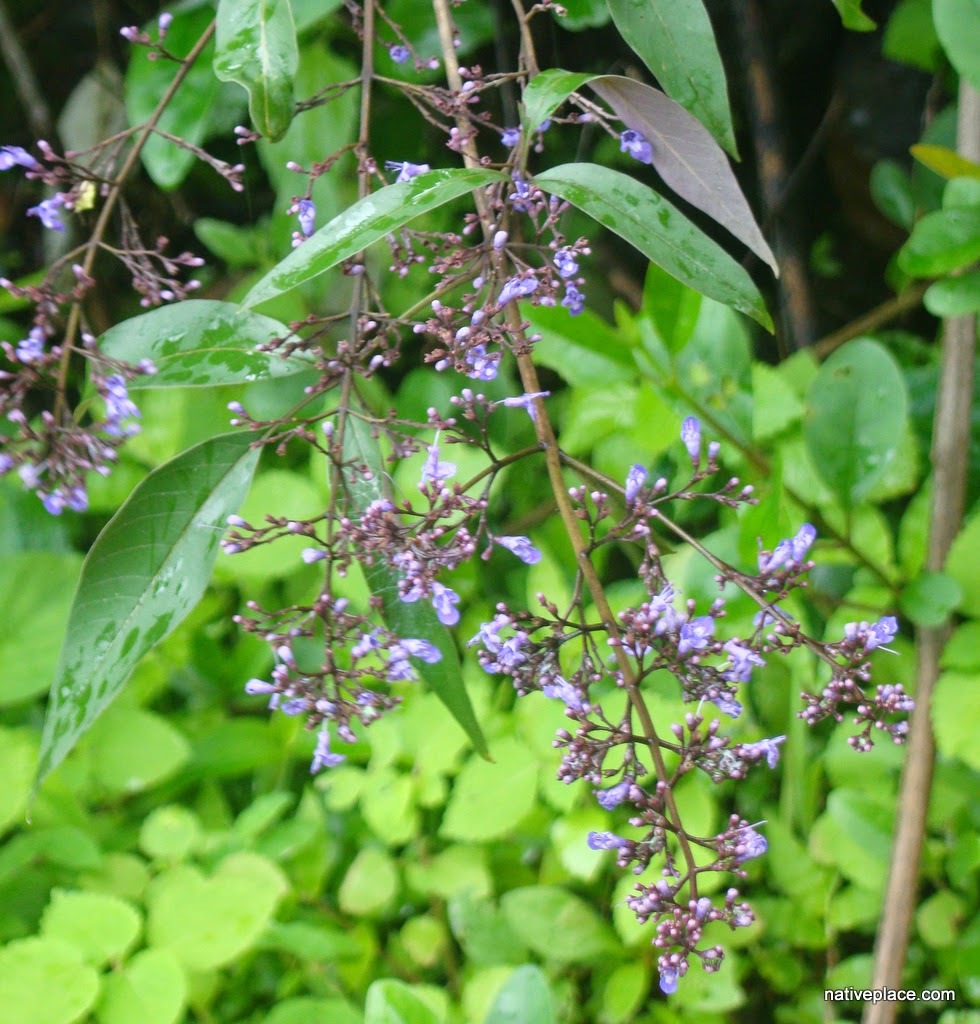
Then we noticed 2 varieties of Vitex Negudo in flower

and the pink frangipani that we had planted 2 years ago

The check dams we had built them in summer seem to be working like magic – tiny little silvery water falls

We came across a tree fall – check Dwane drinking this moss charged water

A medicinal plant in flower – one of the Dashamularisht that is supposed to be in short supply and may be endangered also pink (sorry I don’t know the name)


Green – the color of the paddy we have planted – next weekend is transplanting time so guys if you want to get your feet squishy in muck and plant the rice that we will serve you soon … come on over 


Come on over :)

Peace Bliss & Happy Landings 

Astrid & Sanjay Rao